
November 2026: first published.
A North Carolina license can be suspended for points, under N.C.G.S. § 20-16, when a driver reaches 12 points within three years, and it can be suspended or revoked for high-speed convictions, impaired driving, a missed court date, or an unpaid fine. Driving during a revocation is a separate criminal charge that can add more revocation time.
Most license problems in North Carolina start with a ticket that seemed minor, and most of them get worse because the driver did not know which agency was counting what. The court decides the case, the Division of Motor Vehicles carries out most license suspensions and revocations, and the insurance company decides the premium, each under its own rules.
This guide sets out how each kind of suspension and revocation works, what driving while license revoked means for each, and what it takes to get a license back. Each section links to a more detailed article.
At a glance
- The DMV may suspend a license for 12 or more points within three years, or 8 or more points within three years after reinstatement from a suspension or revocation for traffic convictions (N.C.G.S. § 20-16(a)(5) and (c)).
- A conviction for speeding more than 15 miles per hour over the limit while going faster than 55, or for going faster than 80, brings a mandatory 30-day suspension (N.C.G.S. § 20-16.1(a)).
- A missed court date or unpaid fine on a motor vehicle charge leads to a revocation that takes effect on the sixtieth day after the order is mailed or delivered (N.C.G.S. § 20-24.1(a)).
- Driving while revoked is a Class 3 misdemeanor, or a Class 1 misdemeanor with added revocation time when the revocation was an impaired driving revocation (N.C.G.S. § 20-28(a) and (a1)).
How do driver’s license points lead to a suspension in North Carolina?
The DMV assigns points for each moving violation conviction under the schedule in N.C.G.S. § 20-16(c). It may suspend a license when a driver accumulates 12 or more points within three years, or 8 or more points within three years after a license was reinstated following a suspension or revocation for traffic convictions.
| Examples from the point schedule | License points |
|---|---|
| Passing a stopped school bus | 5 |
| Reckless driving, following too close, illegal passing | 4 |
| Speeding in excess of 55 miles per hour, running a stop sign or red light | 3 |
| Moving violations not named in the statute’s schedule | 2 |
The full schedule in § 20-16(c) assigns 3 to 5 points to other offenses as well, including hit and run with property damage only, failing to yield right-of-way, driving without liability insurance, and speeding in a school zone.
When a driver is convicted of two or more offenses from the same occasion, points are assessed for one offense only, the one with the greater value. Points are not assessed for a conviction that results in a suspension or revocation under another statute.
A first point suspension lasts no more than 60 days, a second no more than six months, and any later one no more than one year. The DMV may substitute up to one year of probation for a point suspension. A driver who reaches seven points, or four points within three years after a reinstatement, may be offered a driver improvement clinic, and completing it removes three points, no more than once in any five-year period.
When a license suspended or revoked for a traffic conviction is restored, the points on the record are cancelled.
Exception: Violations committed while operating a commercial motor vehicle carry a separate, higher point schedule in the same subsection.
According to N.C.G.S. § 20-16(a)(5), (c), and (e), North Carolina General Assembly, as of November 2026.
The number most drivers ask about first is the fine, and it is usually the least important one. The guide to license points versus insurance points compares the two counts side by side.
Are insurance points the same as license points?
No. Insurance points come from the Safe Driver Incentive Plan, which N.C.G.S. § 58-36-65(b) requires to distinguish drivers by their records of at-fault accidents and moving violation convictions and to set premium differentials among them. The plan affects the premium, not the license.
Because the two systems count differently, a conviction that does not threaten the license can still raise a household’s premium for several years. A prayer for judgment continued is one of the few dispositions that can affect the two counts differently, and the guide to prayer for judgment continued explains where its limits are.
According to N.C.G.S. § 58-36-65(b) and (j), North Carolina General Assembly, as of November 2026.
A decision about one ticket is, from a traffic law perspective, really a decision about the next three to five years of the driving record and the insurance bill, so the household’s record belongs in the conversation from the start.
When does a speeding conviction suspend a North Carolina license?
Under N.C.G.S. § 20-16.1(a), the DMV must suspend a license for 30 days on a conviction for exceeding the limit by more than 15 miles per hour while also going faster than 55, or for going faster than 80. A similar second offense within one year of the first brings a 60-day suspension.
On a first conviction only, the trial judge may allow a limited driving privilege for the 30-day suspension, for purposes connected with the health, education, and welfare of the driver and family. A prior offense more than seven years before the current one does not count, and the judge must have proof of financial responsibility before granting the privilege.
The DMV also has discretionary authority to suspend for certain speeding convictions under § 20-16(a): two convictions within 12 months for speeding over 55 and not over 80, speeding over 75 where the limit is under 70, or speeding over 80 where the limit is 70. On a first suspension under those provisions, a district court judge may allow a limited privilege for up to 12 months if the driver has no other moving violation conviction in the previous 12 months.
Exception: A conviction for speeding covered by § 20-16.1(a) together with reckless driving on the same occasion brings a 60-day suspension under § 20-16.1(d).
According to N.C.G.S. § 20-16.1(a) through (d) and (g) and N.C.G.S. § 20-16(a)(9), (10), (10a), and (e1), North Carolina General Assembly, as of November 2026.
Drivers ticketed on Interstates 40 and 85 who live elsewhere face these same suspensions in North Carolina, and the guide for out-of-state drivers covers how they reach a home-state license.
How does an impaired driving charge affect a North Carolina license?
In two stages. A driver charged with an implied-consent offense such as impaired driving who willfully refused testing, had an alcohol concentration of 0.08 or more (0.04 in a commercial vehicle), or was under 21 with any alcohol faces an immediate civil revocation of at least 30 days under N.C.G.S. § 20-16.5. A conviction then brings a revocation of one year under § 20-19(c1), unless the driver’s prior record triggers the four-year or permanent periods in § 20-19(d) or (e).
| Event | License consequence |
|---|---|
| Refusal of a chemical analysis | 12-month revocation by the DMV, effective on the thirtieth day after the order is mailed unless a hearing is requested in writing before then |
| Impaired driving conviction with no prior conviction in the windows below, including a first conviction | One year |
| Conviction where the driver has a prior impaired driving conviction for an offense committed within three years before the date of the current offense | Four years; the DMV may conditionally restore after two years if the statutory conditions are met |
| Conviction where the driver has two or more prior impaired driving convictions, the most recent for an offense committed within five years before the date of the current offense, or a sentence at Aggravated Level One | Permanent; the DMV may conditionally restore after three years, or after 24 months with 12 months of monitored abstinence from alcohol, if the other statutory conditions are met |
The guide to a first-offense DWI covers the civil revocation, the limited privilege, and the restoration conditions, and the guide to breath test refusals covers the refusal revocation.
According to N.C.G.S. § 20-16.5, N.C.G.S. § 20-16.2(d), N.C.G.S. § 20-17(a)(2), and N.C.G.S. § 20-19(c1), (d), (e), (e1), and (e2), North Carolina General Assembly, as of November 2026.
A DWI charge moves on the license track and the criminal track at once, and the license deadlines often arrive weeks before the first court date does.
What happens to a North Carolina license after a missed court date or an unpaid fine?
The DMV must revoke the license when a court reports that a driver charged with a motor vehicle offense failed to appear or failed to pay a fine, penalty, or costs, under N.C.G.S. § 20-24.1(a). The revocation takes effect on the sixtieth day after the order is mailed or personally delivered, and it lasts until the driver disposes of the charge, pays, or makes one of the other showings listed in § 20-24.1(b).
Acting before that date matters. If the driver resolves the case or pays before the effective date, the revocation order and the related entries on the driving record are deleted and no restoration fee is owed. After that date, the restoration fee and any other requirements apply.
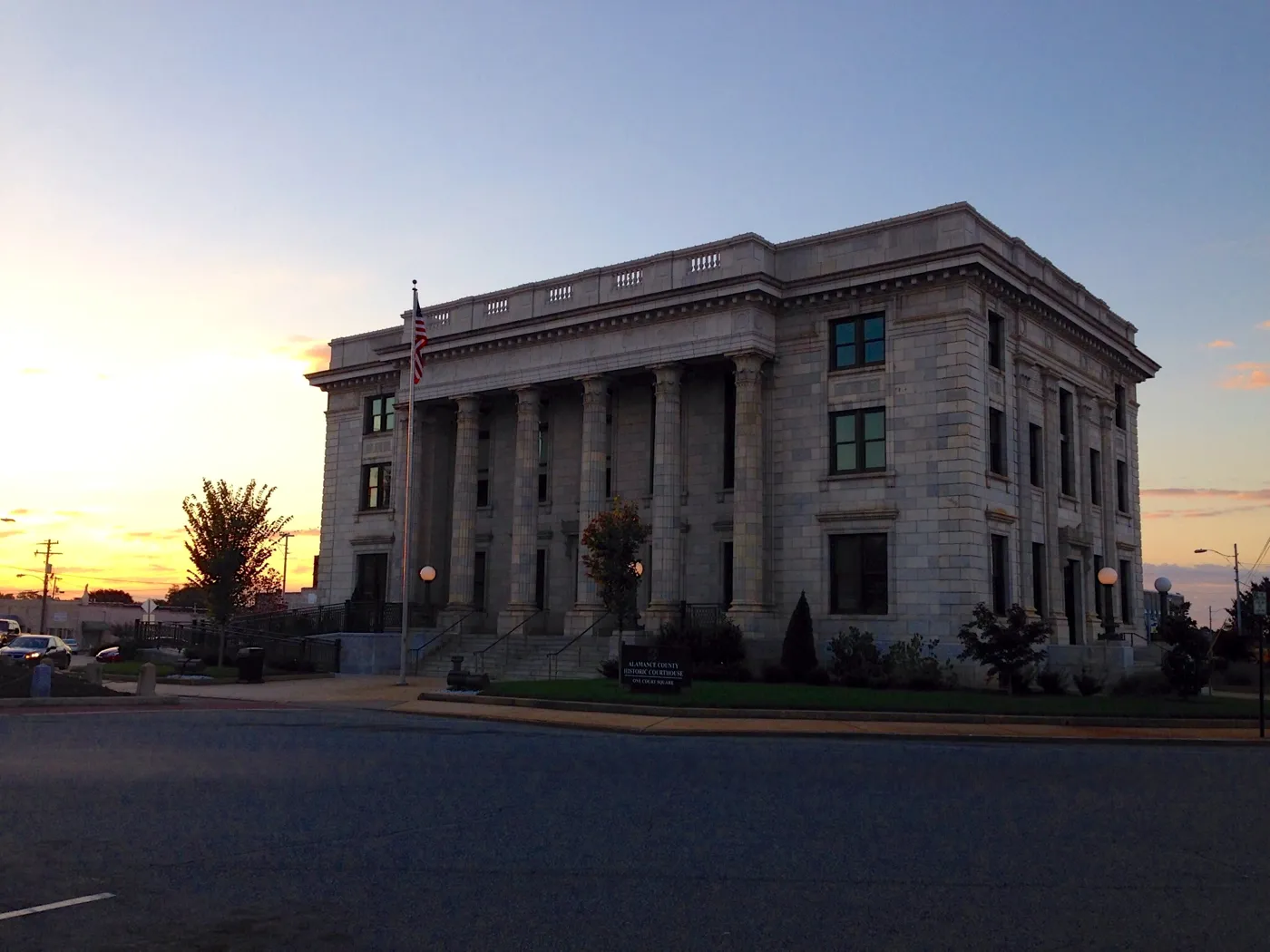
A driver whose license is revoked only for failure to pay may apply to the court for a limited driving privilege valid for up to one year or until the amount is paid, but not more than once in three years. The guide to a missed court date in Alamance County explains what to check in the court record.
According to N.C.G.S. § 20-24.1(a) through (c) and (f), North Carolina General Assembly, as of November 2026.
A missed court date is one of the most fixable license problems there is, as long as it is handled before the revocation takes effect rather than after a traffic stop.
What is the difference between DWLR for an impaired revocation and a not impaired revocation?
The reason for the revocation sets the charge. Driving while revoked is a Class 3 misdemeanor under N.C.G.S. § 20-28(a), but when the revocation was an impaired driving revocation as defined in § 20-28.2(a), it is a Class 1 misdemeanor under § 20-28(a1) and adds a revocation of one year for a first offense, two years for a second, and permanent revocation for a third.
Impaired driving revocations include the refusal revocation, the immediate civil revocation, and the revocation after an impaired driving conviction, among others listed in § 20-28.2(a). A revocation for a missed court date, an unpaid fine, or points is not on that list.
| Situation | Charge | Added DMV revocation |
|---|---|---|
| Revocation not for impaired driving | Class 3 misdemeanor | None, unless the driver held a commercial license or was driving a commercial vehicle (§ 20-28.1(a)) |
| Impaired driving revocation | Class 1 misdemeanor | One year, then two years, then permanent |
| The driver shows the only revocation was a civil revocation whose 30 or 45 days had already run, or a child support revocation for which the driver was already eligible for reinstatement | Punished as driving without a license | Treated as driving without a license for license and insurance purposes |
| A separate moving violation committed while revoked | The moving violation itself | One year, then two years, then permanent, under § 20-28.1 |
The last row is the one drivers miss. A speeding or other moving violation conviction from the same stop can add a year of revocation even where the revocation charge itself adds none. The guide to driving while license revoked covers the penalties and defenses in detail.
Exception: Under § 20-28(a3), it is also a Class 1 misdemeanor to drive during an impaired driving revocation after the DMV has sent notice, or to fail to appear for two years after being charged with an implied-consent offense, with the same added revocation periods.
According to N.C.G.S. § 20-28(a), (a1), (a2), and (a3), N.C.G.S. § 20-28.2(a), and N.C.G.S. § 20-28.1(a) and (b), North Carolina General Assembly, as of November 2026.
Two drivers can be stopped on the same road with the same revoked license and face charges two classes apart, which is why I want the actual DMV order in hand before anyone discusses a plea.
How do you get a North Carolina license back after a suspension or revocation?
It depends on why the license was taken. A suspension or revocation for a set period ends when the period runs and any conditions are met, and a revocation for a missed court date or unpaid fine ends when the case is resolved or the amount is paid. A restoration fee of $83.50 applies to most revocations, and $167.25 to a revocation after an impaired driving conviction, under N.C.G.S. § 20-7(i1).
For a revocation added under § 20-28(a1) or § 20-28.1, a driver may apply for a new license after 90 days of a one-year revocation; under § 20-28(a3), the wait for a one-year revocation is the full year. Under either statute, a driver may apply after one year of a two-year revocation and after three years of a permanent revocation. The DMV may issue the license on satisfactory proof that the driver has not been convicted of a moving violation, or of an alcohol or drug law violation, committed during the revocation period, and it may add restrictions. Under § 20-28(c1), driving while revoked under § 20-28(a) is not treated as a moving violation for this purpose.
A license revoked under § 20-28(a1) after an impaired driving revocation, or under § 20-28(a3), can only be conditionally restored. That requires a substance abuse assessment and proof of financial responsibility at a minimum, completion of any recommended education or treatment, and an ignition interlock if the assessment finds that the driver abuses alcohol.
According to N.C.G.S. § 20-7(i1), N.C.G.S. § 20-28(c) through (c5), and N.C.G.S. § 20-28.1(c), North Carolina General Assembly, as of November 2026.
Getting a license back usually means mapping two or three overlapping orders at once. The firm’s traffic law practice page and its DWI defense page describe that work.
Checking the driving record before court
Nearly every license question in North Carolina is answered by two documents: the DMV driving record and the court record for each pending case. Reviewing both before the court date shows which revocations are in place, which can still be avoided, and which dispositions would add to them.
Call Doby & Griffis Law at 336-221-8900 to schedule a consultation about your license and any pending charge at our Graham office.